
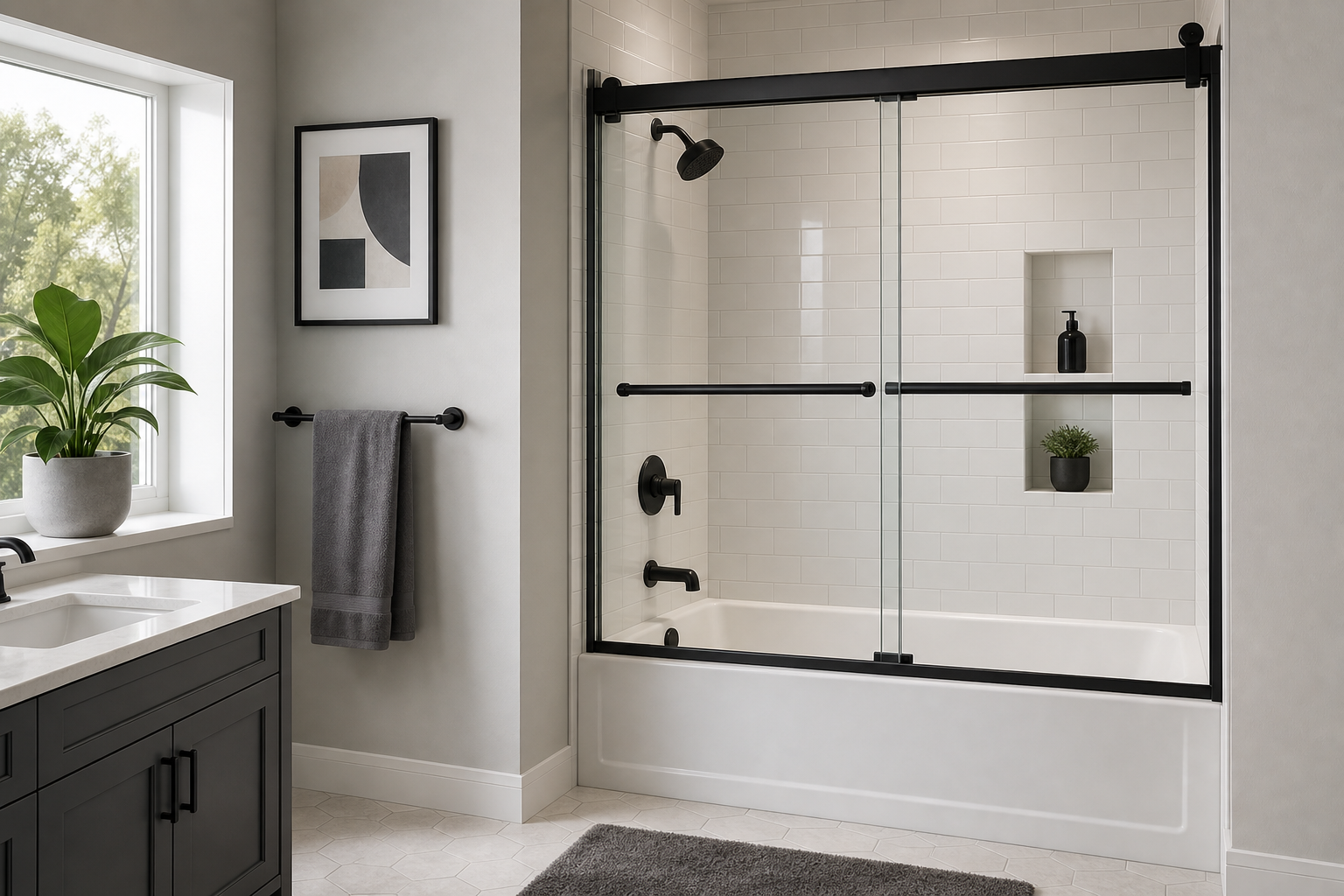
Tub doors: how to choose the right style, glass, and hardware
If you’re upgrading a bath-and-shower combo, the right tub doors can improve water control, durability, and daily convenience—while elevating the look of your bathroom. This guide breaks down door types, measuring tips, glass choices, hardware details, installation considerations, and maintenance so you can make a confident, long-lasting decision.
Door types and layouts for tub doors
Start by matching the door style to your space and routine. Each option has trade-offs for clearance, access, and cleaning.
- Sliding (bypass) tub doors: Two or three panels travel on a track to open from either side. Great where floor space is tight because panels do not swing out. Look for smooth rollers, sturdy top rails, and easy-clean tracks.
- Hinged (swing) or pivot doors: A single pane swings on hinges or a pivot. These offer a wide entry and minimalist look but need clear floor space to swing without hitting fixtures.
- Bi-fold or folding doors: Panels fold inward/outward to reduce swing clearance. Helpful in compact baths, though more joints mean more surfaces to clean.
- Fixed panel (screen) doors: A stationary glass panel that partially covers the tub. Simple to maintain and visually light, but splash control depends on showerhead placement and bather habits.
Also consider the opening side (left or right) relative to your showerhead, vanity, and toilet. For sliding units, confirm you can reach the controls easily when the door is closed.
Measuring and fit: getting the basics right
Accurate measurements are essential for performance and safety. Before choosing tub doors, work through these steps:
- Verify level and plumb: Use a level to check the tub rim and walls. Out-of-plumb walls are common and affect how well panels align and seal.
- Measure width in three places: Top, middle, and bottom between finished walls. Record the smallest number to ensure the unit fits the tightest point.
- Confirm height clearance: Note ceiling height, showerhead height, and any bulkheads or lights. Standard tub doors vary in height; ensure spray stays inside the enclosure.
- Check tub lip and apron: The flat deck where the bottom seal rests should be wide and level enough for the threshold and water deflection.
- Plan for obstacles: Account for faucets, towel bars, toilets, or radiators that may interfere with door swing or panel overlap.
Bring your measurements when you shop so you can compare stock sizes versus custom sizing. For alcoves that aren’t square or for special heights, custom-fitted tub doors can solve alignment and gap issues.
Glass, thickness, and hardware finishes
Glass and hardware choices shape both safety and style. Here’s how to think through the variables:
- Safety glass: Tub doors are typically made from tempered safety glass designed to break into small granular pieces rather than sharp shards if impacted. Always confirm that panels are tempered.
- Glass thickness: Common thicknesses include lighter panels for framed systems and heavier panels for semi-frameless or frameless looks. Thicker glass can feel more substantial and may reduce flex, while lighter glass keeps weight down on rollers and hinges.
- Glass clarity and privacy: Options often include clear, low-iron (for truer color), frosted, patterned, or tinted. Clear glass makes small rooms feel larger, while frosted or patterned surfaces add privacy and help disguise water spots.
- Protective coatings: Factory-applied hydrophobic coatings can help repel water and soap residue, reducing cleaning frequency. If your panels don’t come coated, aftermarket treatments are available—follow product directions and compatibility guidance.
- Framed, semi-frameless, or frameless: Framed systems use continuous metal around the glass, semi-frameless reduce metal for a cleaner border, and frameless rely on thicker glass with minimal hardware. Aesthetics, maintenance preference, and budget will guide this choice.
- Hardware finishes: Popular finishes include Chrome, Matte Black, Brushed Nickel, and Gold tones. Match or thoughtfully contrast with your faucet, drawer pulls, and lighting for a cohesive design.
When comparing models, pick up a sample handle or slide a showroom door if possible. Heft, smoothness, and hardware quality are good indicators of everyday usability.
Water control, sealing, and ventilation
Keeping water in the tub is the most practical reason to choose tub doors over curtains. Pay attention to these design details:
- Overlap and coverage: Sliding panels should overlap generously at midline. Fixed screens should extend far enough to intercept splash from the showerhead.
- Bottom sweeps and seals: Clear vinyl or rubber sweeps along the bottom edge deflect water back toward the tub. Inspect how easily they can be replaced later.
- Vertical jambs and magnets: On swing and sliding units, vertical seals and magnetic strips help close gaps that cause spray leaks.
- Thresholds and deflectors: A slightly raised threshold can guide water inward. Ensure it’s comfortable to step over and compatible with your tub’s shape.
- Ventilation: Even with doors, proper ventilation (exhaust fan or window) is essential to reduce condensation, mildew, and hardware corrosion. Leave panels partially open after showers to promote airflow when practical.
Set realistic expectations: a door is a water manager, not a submarine hatch. Correct showerhead aim and consistent maintenance are part of the solution.
Maintenance and care for tub doors
Well-chosen tub doors are low-hassle with a simple routine:
- Daily: Squeegee glass and wipe the bottom sweep after showers to minimize mineral spotting.
- Weekly: Clean glass with a non-abrasive, ammonia-free cleaner; wipe tracks and hinges; check for debris around rollers.
- Seasonal: Inspect and replace worn sweeps and seals; tighten handles and set screws; verify roller alignment and lubrication if specified by the manufacturer.
Avoid abrasive pads and harsh chemicals that can scratch coatings or pit metal finishes. If your water is hard, consider a glass-safe cleaner formulated to break down mineral deposits.
Installation considerations and safety
Installing tub doors involves handling tempered glass, drilling tile, and aligning hardware. Think through the following before deciding how you’ll proceed:
- Substrate and anchoring: Determine if your walls are tile, fiberglass, or another material. Anchors and drill bits must match the substrate, and waterproofing behind tile should be protected during drilling.
- Plumb and level tolerances: Small adjustments at the track, hinges, or wall profiles can compensate for minor wall variations. Severe out-of-plumb conditions may require shimming or custom fabrication.
- Panel handling: Tempered glass is strong in normal use but vulnerable to edge impacts and point loads. Always follow manufacturer handling guidelines.
- Clearances and code awareness: Ensure swing doors won’t hit fixtures and that panels won’t obstruct safe egress from the tub. When in doubt, consult product documentation or a qualified installer.
If you are not comfortable with exact measuring, drilling, and glass handling, consider professional installation for proper fit and alignment.
A quick buying checklist for tub doors
Use this list to compare options and avoid common pitfalls:
- Door style that matches your space: sliding, hinged/pivot, bi-fold, or fixed screen
- Accurate alcove width (top/middle/bottom) and level checks
- Panel height that contains spray without crowding sightlines
- Tempered safety glass with preferred thickness
- Desired glass type: clear, low-iron, frosted, patterned, or tinted
- Framed, semi-frameless, or frameless design
- Hardware quality and finish that coordinates with your fixtures
- Effective water management: overlaps, sweeps, magnets, and threshold
- Maintenance access: replaceable seals, easy-to-clean tracks, and wipe-friendly edges
- Installation plan: substrate-compatible anchors and alignment allowances
- Warranty and documentation retained for future parts and care instructions
FAQ: tub doors
Are sliding or hinged tub doors better for small bathrooms?
Sliding tub doors usually conserve floor space because panels don’t swing out into the room. If you need the widest possible opening for access, a hinged door can be helpful—but only when you have clear swing area. For very tight spaces, a bi-fold or a well-sized fixed screen can also work.
What glass thickness should I choose for tub doors?
Thicker glass often pairs with semi-frameless or frameless designs and can feel more substantial. Thinner glass is common in framed systems and reduces weight on rollers or hinges. Balance aesthetics, feel, and hardware design when selecting thickness, and always choose tempered safety glass.
How do I keep water from leaking around my tub doors?
Combine correct door sizing with good seals: ensure adequate panel overlap, use intact bottom sweeps, and verify vertical seals or magnets are aligned. Check that your showerhead isn’t aimed at gaps, and maintain ventilation to reduce condensation. Replacing worn seals is a simple way to improve performance.
Do tub doors work with curved or non-standard tubs?
Some stock enclosures are designed for standard straight alcoves. For curved lips, non-standard widths, or out-of-plumb walls, custom-fitted tub doors can align better, reduce gaps, and improve function. Bring precise measurements and tub details when you explore options.
What’s the easiest type of tub door to clean?
Fixed screens have fewer moving parts and no overlapping panels, which simplifies cleaning. Sliding doors require attention to tracks and rollers, while hinged doors eliminate tracks but add hinge hardware to wipe down. Hydrophobic glass coatings and a daily squeegee help any style stay clearer.


