
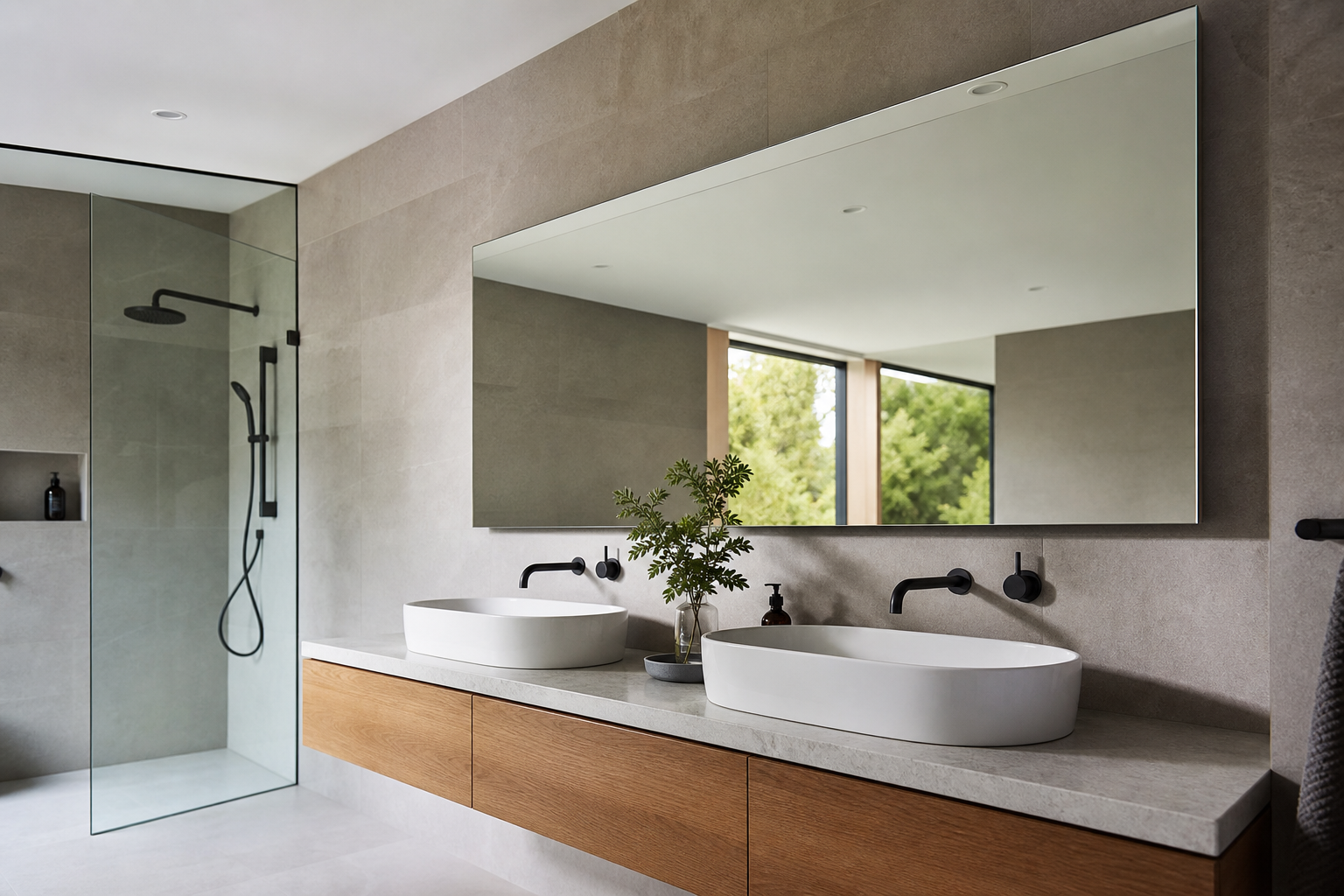
Questions to ask before choosing frameless mirrors polished edge
If you plan a bathroom vanity, gym wall, or commercial fit-out, a frameless mirror with a polished edge can deliver a clean, modern finish. This checklist uses the exact phrase frameless mirrors polished edge and gives the supplier questions and decision checks you can bring to a site visit or a measure-and-quote appointment. Each item explains why it matters, what a reliable answer sounds like, and how to compare quotes on equal terms.
How to use this checklist
This article is organised as decision checks, not a sales pitch. For every concern you will find why it matters, the exact phrasing to ask a fabricator, and the technical detail to accept or reject an answer. Print or save the checklist and use it as an interview script for phone quotes or during an on-site measurement. For a local example, view the OZ Shower Doors frameless mirror with polished edge product page as a reference.
Glass and backing: ask these exact technical questions
Why it matters: the mirror backing and silvering determine whether a mirror will corrode or cloud in humid rooms. On a polished-edge frameless mirror the problem shows quickly at the perimeter, so the backing specification is a core durability question.
- Ask: “What mirror backing do you use, and is a copper-free or sealed silvering available for bathrooms?”
- Ask: “Do you apply a factory protective backing, and what does the warranty cover for silvering or black spots?”
- Ask: “Is the polished edge treated or sealed to reduce moisture ingress?”
What to expect: reputable fabricators will offer a sealed or copper-free option for high-humidity environments. Independent guidance recommends copper-free backing for bathrooms because it removes the corrosion-prone copper layer and improves longevity in moist conditions. If a supplier cannot explain the backing or refuses to provide specifications in writing, treat that as a buying signal to request clarification or compare another quote (see Custom-Cut Mirrors: Polished vs. Beveled Edges).
Local note: if you are in Edmonton, ask whether the supplier manufactures in-house and whether they can confirm backing and treatment at the measurement visit. Local in-house production reduces the chance of specification errors between quote and final product.
Edge finish: how polished differs from beveled and when to pick it
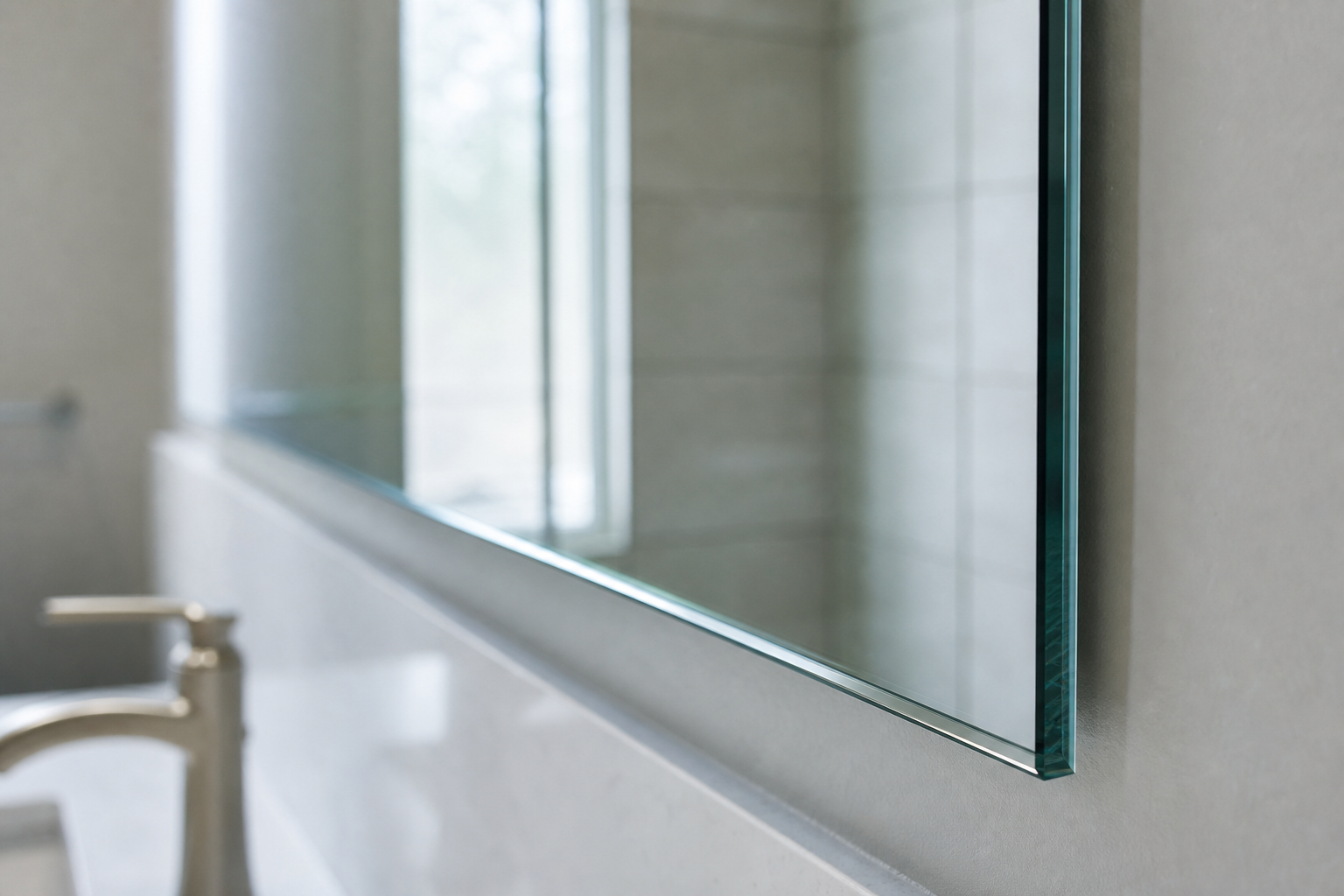
Why it matters: the edge is the visible finishing detail on a frameless mirror. A polished edge reads minimal and modern and keeps the mirror flush to the wall. A beveled edge creates a decorative rim that catches light and commands more labour.
- Ask: “Is the edge a single-pass polished finish or a multi-pass beveled profile, and can you show samples of both?”
- Ask: “How will the chosen edge interact with light at the installation angle, and can you supply a photo or close-up sample?”
Technical difference: a polished edge is produced in a single pass through an edger and leaves a square 90-degree profile. A beveled edge requires additional tooling and passes, which increases cost and produces a sloped decorative rim. For a contemporary, wall-flush look choose polished edge; pick beveled when you want a framed, light-catching profile (see Beveled vs Polished Mirror Edges and Custom-Cut Mirrors: Polished vs. Beveled Edges for production detail).
Thickness, sizing and visual proportion: what to confirm
Why it matters: glass thickness influences perceived quality, flatness, and the mirror’s tendency to bow on large spans. Undersized thickness on a wide or wall-to-wall installation can create waviness that undermines the frameless aesthetic.
- Ask: “What thickness do you recommend for this specific size and mounting type, and why?”
- Ask: “If I want a wall-to-wall or oversized panel, at what point do you change the recommended glass or add structural backing?”
- Ask: “Can you show examples of the same size finished in different thicknesses so I can compare reflection and edge presence?”
What to expect: a trustworthy supplier will explain how increasing thickness improves stiffness and reduces optical distortion on larger panels. If the supplier offers only one standard thickness without justification, ask for photos of similar projects or consider a second opinion. Frameless mirror selection guidance stresses that proportion, thickness and edge finish are non-negotiables for premium results (see Frameless Wall Mirrors: Avoid a Cheap Look).
Mounting and installation: adhesive, cleats or clips and what each implies
Why it matters: the mounting method determines flushness, repairability and the risk of damage during removal. Different methods suit different priorities: an invisible adhesive mount favours appearance, while mechanical fixes favour serviceability.
- Ask: “Which mounting method do you recommend for this polished-edge frameless mirror: structural adhesive, mirror cleat, or clips?”
- Ask: “Which adhesive or mechanical system will you use, and how will you protect the polished edge during transport and installation?”
- Ask: “If I need to remove or replace the mirror later, what is the removal procedure and expected cost?”
Adhesive mounting and mechanical mounting explained
Adhesive flush mounting gives the cleanest look because the mirror sits flat to the wall with no visible fixings. The trade-off is that removal is harder and can risk edge damage if not done by professionals. Mechanical mounting with cleats or clips allows easier removal and servicing, but may introduce a visible reveal. Before cutting, confirm whether adhesive will be used and whether the installer leaves a removable cleat option if you want future access. Online ordering guides highlight mounting method as a primary decision to confirm before measurement and cutting (see How to Order a Custom Mirror Online: Step-by-Step Guide).
Humidity and corrosion risk: when to insist on copper-free backing
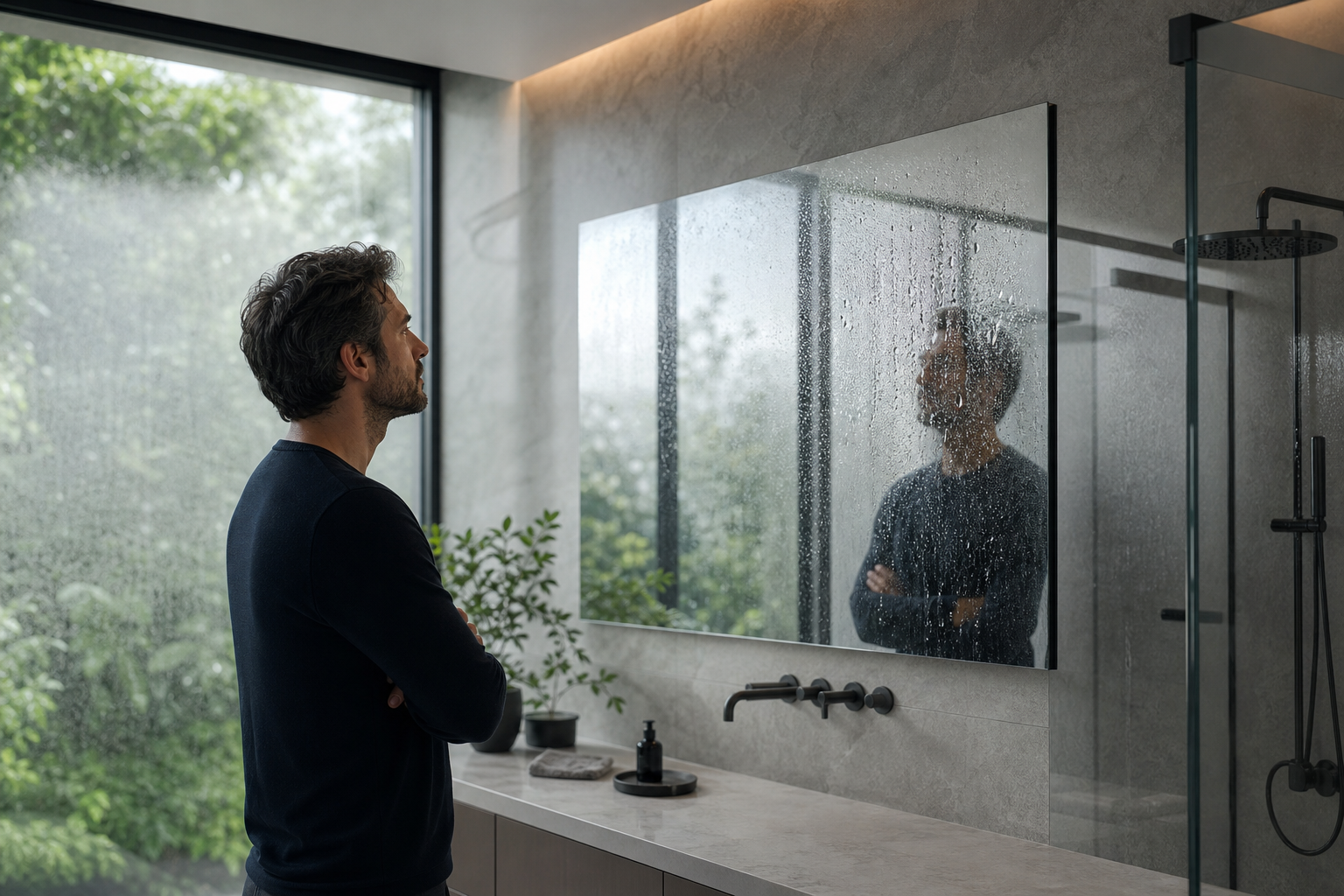
Why it matters: ordinary mirror silvering can corrode over time under repeated exposure to humidity or steam. If the mirror will live in a bathroom, steam room, or a gym near showers, insist on written confirmation about corrosion resistance and the option for copper-free or sealed silvering.
- Ask: “Do you recommend copper-free or sealed silvering for this installation, and what is the added cost?”
- Ask: “What lifetime should I expect for the backing in a bathroom environment, and does the warranty explicitly cover silvering failure?”
What to expect: many fabricators offer copper-free options for wet locations because these remove the copper layer that can accelerate corrosion. Ask the supplier to include backing specification and bathroom suitability in writing so quotes remain comparable (see Custom-Cut Mirrors: Polished vs. Beveled Edges).
Warranty, repairs and scheduling: what to require in writing
Why it matters: a clear warranty and a reliable scheduling process protect you from repeat visits and slow repairs. Ask for written terms that cover backing/silvering failure, edge damage during installation, and labour for warranty repairs. Also confirm lead times and how the company communicates if they must reschedule.
- Ask: “Please include the warranty scope and exclusions in the written estimate. Does it cover backing corrosion, edge damage and installation labour?”
- Ask: “What is your standard repair turnaround for warranty issues, and how will you notify me of any delays?”
- Ask: “What protections do you use during transport and installation to prevent chips or edge damage?”
How to interpret objections: suppliers may explain that custom cuts take longer, stock glass thickness is limited, or copper-free backing has an additional cost. Accept these answers when they come with a clear timeline, documented alternatives and a reasoned cost estimate. Decline a supplier who refuses to provide written backing specifications or a clear warranty for humidity-related silvering issues.
Final decision checklist and sample questions to bring to your site visit
Use this compact checklist at the site visit or when comparing quotes. Copy the exact questions to ensure apples-to-apples comparisons.
- Product and backing: “What backing and silvering do you supply, and is a copper-free option available for bathrooms?”
- Edge finish: “Is this polished or beveled, and can I see a sample or photo of the finished edge?”
- Thickness and size: “What thickness do you recommend for this size and mounting, and why?”
- Mounting: “Which mounting method will you use and how will you protect the polished edge?”
- Warranty and repairs: “Please include warranty terms for backing, edge damage and installation in writing.”
- Scheduling: “What is the lead time for production and the guaranteed installation window?”
Sample phrasing for a measure-and-quote appointment: “Please confirm in writing the backing type, edge finish, recommended thickness, mounting method, warranty scope, and estimated production and install dates. I want these items documented before cutting.” That phrasing forces suppliers to state the technical facts you need to compare offers accurately.
Local step: if you are in Edmonton, request an on-site measurement and written estimate from a local fabricator. OZ Shower Doors offers in-house measurement, fabrication and installation and lists a polished-edge frameless mirror on the company site for reference. Bringing the checklist to the measurement ensures the fabricator verifies thickness and mounting options on site.
Frequently asked questions
What is a polished edge on a frameless mirror and how does it differ from a beveled edge
A polished edge is a square 90-degree finish created in a single pass on an edger that gives a flush, contemporary look. A beveled edge is cut at an angle and requires additional passes and tooling, producing a decorative rim that catches light. Production details are discussed in Beveled vs Polished Mirror Edges and Custom-Cut Mirrors: Polished vs. Beveled Edges.
When should I specify a copper-free mirror for a bathroom or gym
Specify a copper-free or sealed silvering for mirrors that will be exposed to regular humidity or steam. Copper-free backing omits the copper layer that can accelerate corrosion, improving long-term performance in wet rooms. Ask for the backing specification and warranty in writing so you can compare quotes on equal terms.
What questions should I ask about glass thickness and why does it matter
Ask which thickness the supplier recommends for your mirror size and mounting. Thickness affects flatness, perceived quality and the risk of optical distortion on large panels. Reputable suppliers will justify thicker glass for larger spans and explain any additional support or backing required.
Which mounting method gives a truly flush frameless look and what trade-offs come with it
Adhesive flush mounting produces the cleanest, wall-hugging result with no visible fixings. The trade-off is more difficulty for later removal and potential risk during removal if not handled by professionals. Cleats or clips make servicing easier but may be visible at the perimeter.
What warranty and repair terms should I require before installation
Require written coverage for backing or silvering failure in humid environments, edge damage that occurs during installation, and labour for warranty repairs. Also ask for a stated repair turnaround time and a communication protocol for delays. If a supplier will not put these items in writing, consider a different installer.
Authoritative references and further reading: see Custom-Cut Mirrors: Polished vs. Beveled Edges, Beveled vs Polished Mirror Edges, Frameless Wall Mirrors: Avoid a Cheap Look, and How to Order a Custom Mirror Online: Step-by-Step Guide for production and ordering best practice.
Ready to move forward locally? Request an on-site measure-and-quote and bring this checklist when you meet the fabricator. For a local example and product details, view the OZ Shower Doors frameless mirror with polished edge and request a free measure-and-quote through the OZ Shower Doors homepage.


