
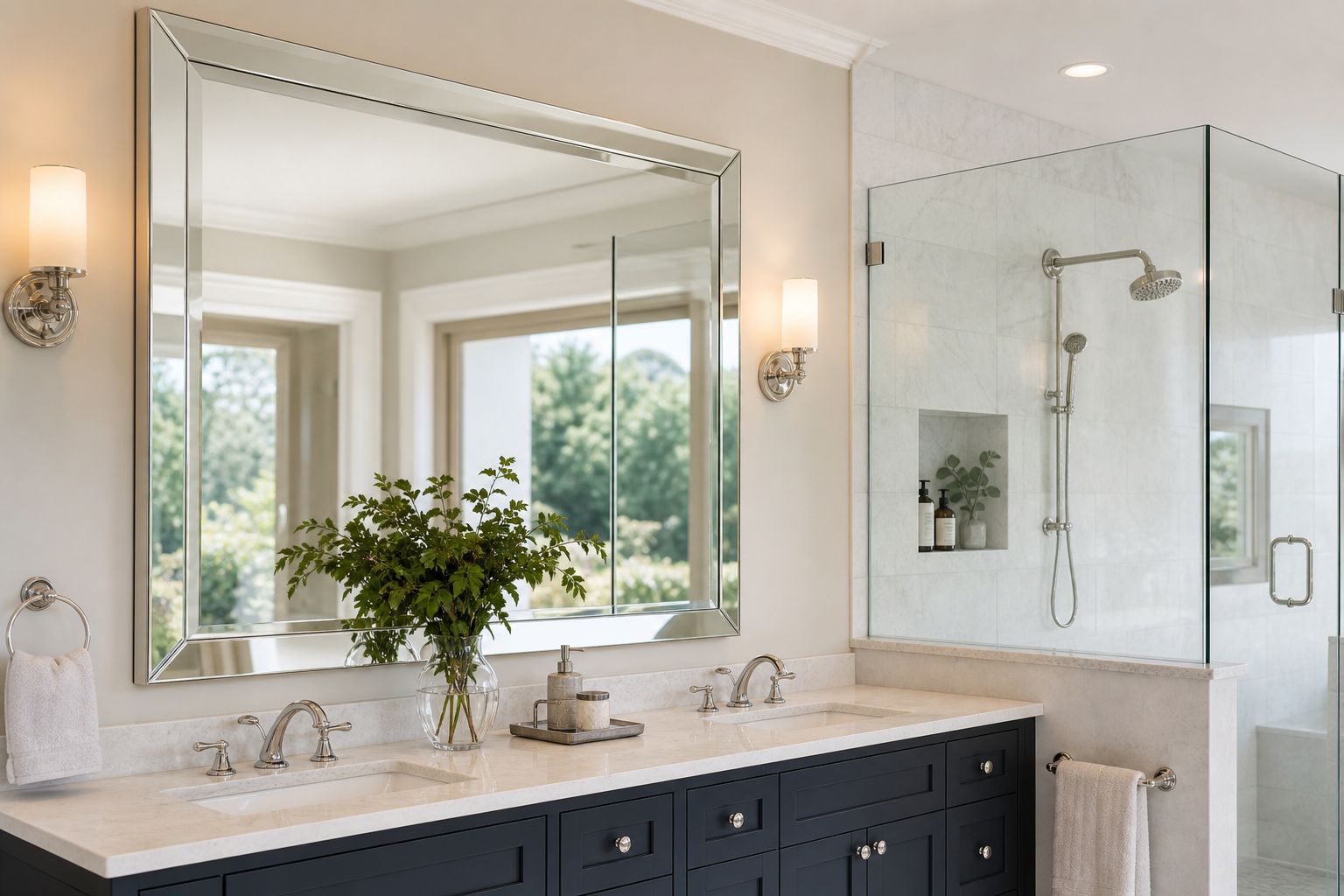
Which questions matter when choosing beveled edge mirrors?
Beveled edge mirrors add a refined, jewelry-like detail to bathrooms, vanities and feature walls, but they require different production, mounting and material choices than a simple polished edge. Use this question-led checklist to inspect quotes, compare bevel widths and finishes, and avoid common mistakes when ordering custom mirrors in Edmonton and surrounding Alberta.
Quick checklist: essential questions to ask now
- What bevel width and profile will you cut and can I see samples or photos?
- How is the bevel produced and polished?
- What glass thickness and backing do you recommend for this size and location?
- Is the backing corrosion resistant for humid bathrooms?
- Who measures and who is responsible for final fit on site?
- Do you fabricate locally and can you show recent projects or references?
- What are the expected installation methods and anchors for my wall type?
What is a beveled edge and how is it made
A beveled edge is a faceted, angled cut around the mirror perimeter that is ground and polished to create a reflective chamfer. Unlike a simple polished pencil edge, a bevel requires additional cutting and polishing passes and is typically produced on a separate beveling machine to achieve the refined finish buyers expect. This extra work explains why bevels are a distinct option during quoting and production Beveled vs Polished Mirror Edges.
How bevel width and profile change the look
Bevel width is an aesthetic selection. Narrow bevels are subtle and work well on small vanity mirrors, while wider bevels read like a frame and catch light more dramatically. Makers can produce bevels to customer-specified widths; ask for photos or true-to-scale drawings so you can visualise the effect in your room rather than relying on generic terminology. For artisan examples and options on bevel width and presentation, see an explanation of bevel choices and framed applications Bevelled Mirror in a Beautiful Frame.
How to preview the finished look
- Request close-up photos of the exact bevel width and the same glass thickness you plan to order.
- Ask whether the sample photos were taken under similar lighting to your installation space.
- Where available, view a physical sample or visit a recent local installation.
Edge clarity and the green tint question
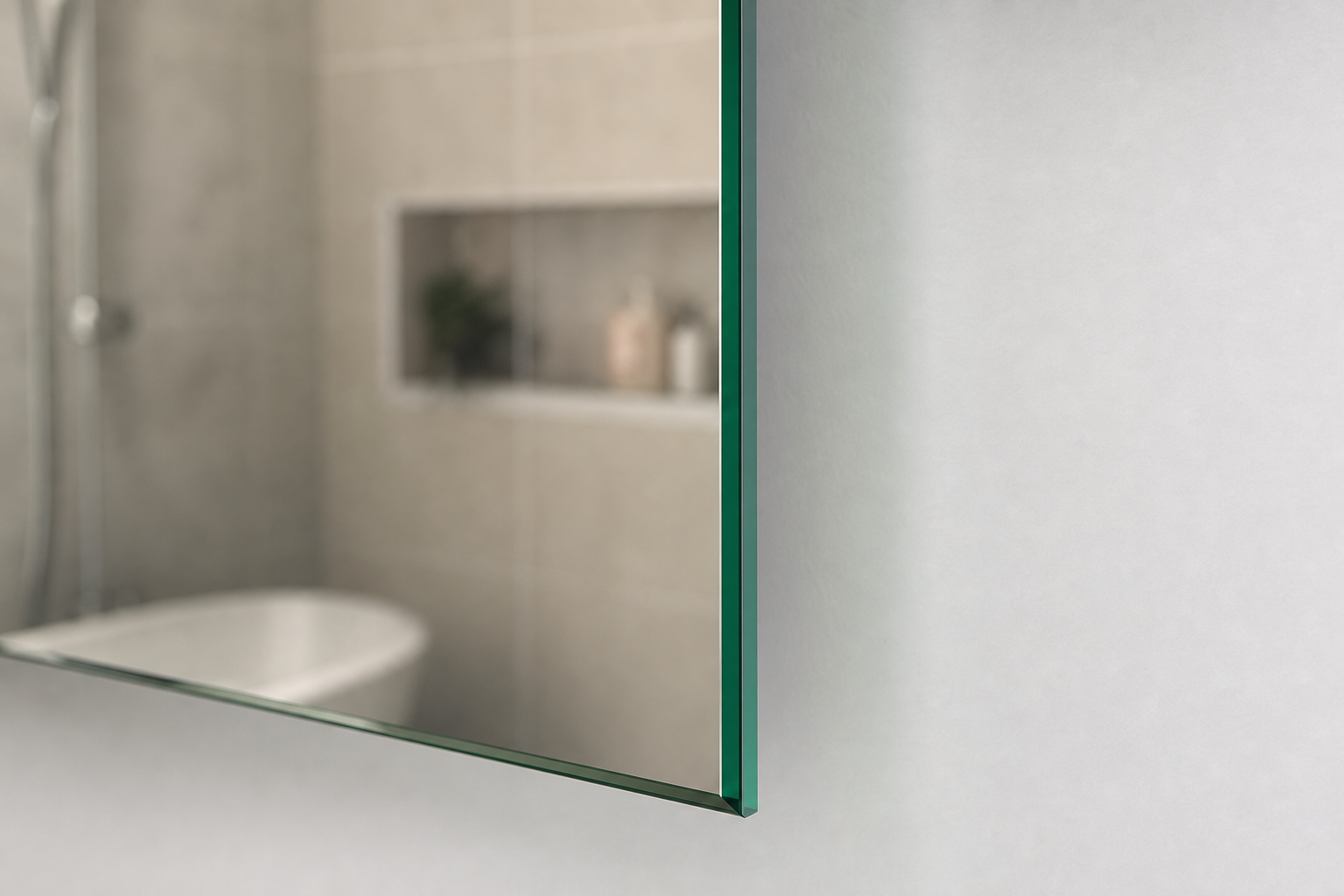
Ordinary float glass contains iron, which can produce a faint green cast along cut edges and therefore be visible in a bevel. If you need a neutral, high-clarity bevel line, discuss low-iron or extra-clear glass options with your supplier and ask to see how the bevel reads in daylight and artificial light. The material characteristic of float glass and its effect on bevel appearance is documented in mirror maker notes and case studies Bevelled Mirror in a Beautiful Frame.
Backing, mounting and bathroom installation details
Back paint and mirror backing quality are critical for durability, especially in humid bathroom environments. Ask whether the backing is a durable, corrosion-resistant formula and how the manufacturer protects the painted surface during transport and installation. For frameless wall mirrors to look premium rather than cheap, non-negotiable factors include glass thickness, edge treatment, backing quality and appropriate mounting hardware and methods Frameless wall mirrors: avoid a cheap look.
Specific backing and mounting questions to ask
- What backing paint or coating do you use and is it rated for bathroom humidity?
- How will the mirror be secured: mirror clips, French cleat, concealed Z-bar, or adhesive?
- What anchor type will you use for plaster, drywall over studs, tile, or masonry?
- Do you provide a written installation plan and do installers verify wall structure on site before fixing?
If the mirror includes integrated lighting or electrical features, ask the supplier for the manufacturer’s installation checklist, electrical safety measures and any required clearances. Mirror manufacturers publish standard question lists for lit mirrors and recommend confirming these items before purchase How to select the right lighted mirrors.
What to confirm about measurement, fabrication and local manufacturing
Clarify who takes responsibility for exact measurements. The most reliable workflow is a supplier measurement visit followed by in-house fabrication to those templates. Local fabrication shortens communication cycles and often improves fit because the fabricator can return for minor adjustments without long shipping waits. OZ Shower Doors describes an end-to-end workflow that includes consultation, measurement, in-house production and professional installation, which helps avoid split-responsibility errors during handoffs OZ Shower Doors.
If you prefer local production, ask whether the supplier manufactures in Edmonton and whether they can show recent projects or references. Local manufacturing can reduce lead-time risk and simplify aftercare, but do not accept vague statements without examples.
Common mistakes, red flags in quotes and realistic supplier objections

Be ready to spot these mistakes or warning signs when reviewing quotes or talking with fabricators:
- Vague bevel description. If a quote lists only "beveled edge" without a width, profile or photo, ask for clarification.
- No photos or samples. Suppliers unable to show recent bevel work make it hard to judge finish quality.
- Unclear backing specification. A missing backing type on a bathroom mirror quote is a real risk for corrosion later.
- Split responsibility for measurement. If the supplier expects you to measure without explaining tolerances, expect more on-site adjustments.
- Too-good-to-be-true turnaround claims without details. Fast production is possible, but ask what stage is the bottleneck and whether local fabrication is involved.
Acceptable or realistic supplier objections you may hear include difficulty sourcing an exact matching hinge or custom part for very old fittings, or a need to verify wall backing before committing to an anchor method. Those answers are reasonable when accompanied by a clear plan and timeline for resolving the issue.
How to compare quotes: decision criteria and next steps
When you have two or three quotes, use these decision criteria in order:
- Bevel width, profile and photographed evidence of finish quality.
- Glass thickness and backing specification appropriate to the mirror size and room humidity.
- Mounting method and proof the installer will verify wall structure on site.
- Local fabrication and the supplier’s ability to show recent installations or references.
- Clear responsibilities for measurement, fabrication, installation and follow-up.
Ask each supplier for written confirmation of these items before booking. If a supplier hesitates to document backing or anchor methods, get a second opinion.
Concise next step and appointment checklist
Before the measurement visit, have these items ready and confirm the following six answers from the fabricator:
- Exact mirror dimensions and where the final measurement responsibility lies.
- Chosen bevel width in millimetres or an exact visual sample.
- Glass thickness and the backing type to be used.
- Mounting method and anchor type for your wall.
- Whether the mirror will be made locally and a photo of a recent similar project.
- Who to contact for post-installation follow-up and what warranty or service process applies.
For product examples and to request a measurement, view bevel options on the supplier’s product page for a bevel edge mirror.
Frequently asked questions
How is a beveled edge cut and polished?
Bevels are cut by grinding a shallow chamfer around the glass perimeter and then polished to a mirror finish. This requires additional cutting and polishing passes compared with a simple pencil edge and is usually done on a dedicated beveling machine Beveled vs Polished Mirror Edges.
Will the bevel show a green tint and how can I avoid it?
Ordinary float glass can show a faint green tint at cut edges because of iron content. To reduce that effect, specify low-iron or extra-clear glass, and ask the supplier to show how the bevel reads in both daylight and the room lighting Bevelled Mirror in a Beautiful Frame.
What bevel width should I choose for a bathroom vanity mirror versus a full-length mirror?
Narrow bevels suit small vanity mirrors for a subtle finish, while wider bevels create a more decorative frame-like effect suited to feature or full-length mirrors. Request photos of the proposed width on the same mirror size to compare visual impact.
Can beveled mirrors be mounted frameless in humid bathrooms and what backing should I ask for?
Yes, but the backing must be corrosion resistant and the installer should use appropriate mounts and sealants. Ask the supplier about the backing formula and whether it is specifically rated for bathroom humidity and steam conditions Frameless wall mirror guidance.
What are the top warning signs in a quote that should make me get a second opinion?
Red flags include no bevel width specified, no backing detail for bathroom mirrors, inability to provide photos of recent bevel work, and unclear responsibility for measurement versus installation. If those items are missing, ask questions and obtain another written quote.
OZ Shower Doors offers local measurement, in-house fabrication and professional installation in Edmonton and surrounding Alberta; see their bevel options to request a quote or measurement bevel edge mirror.
Have these questions printed or saved on your phone when you call fabricators. A short focused checklist will help you compare finishes and avoid common mistakes before you commit.


