
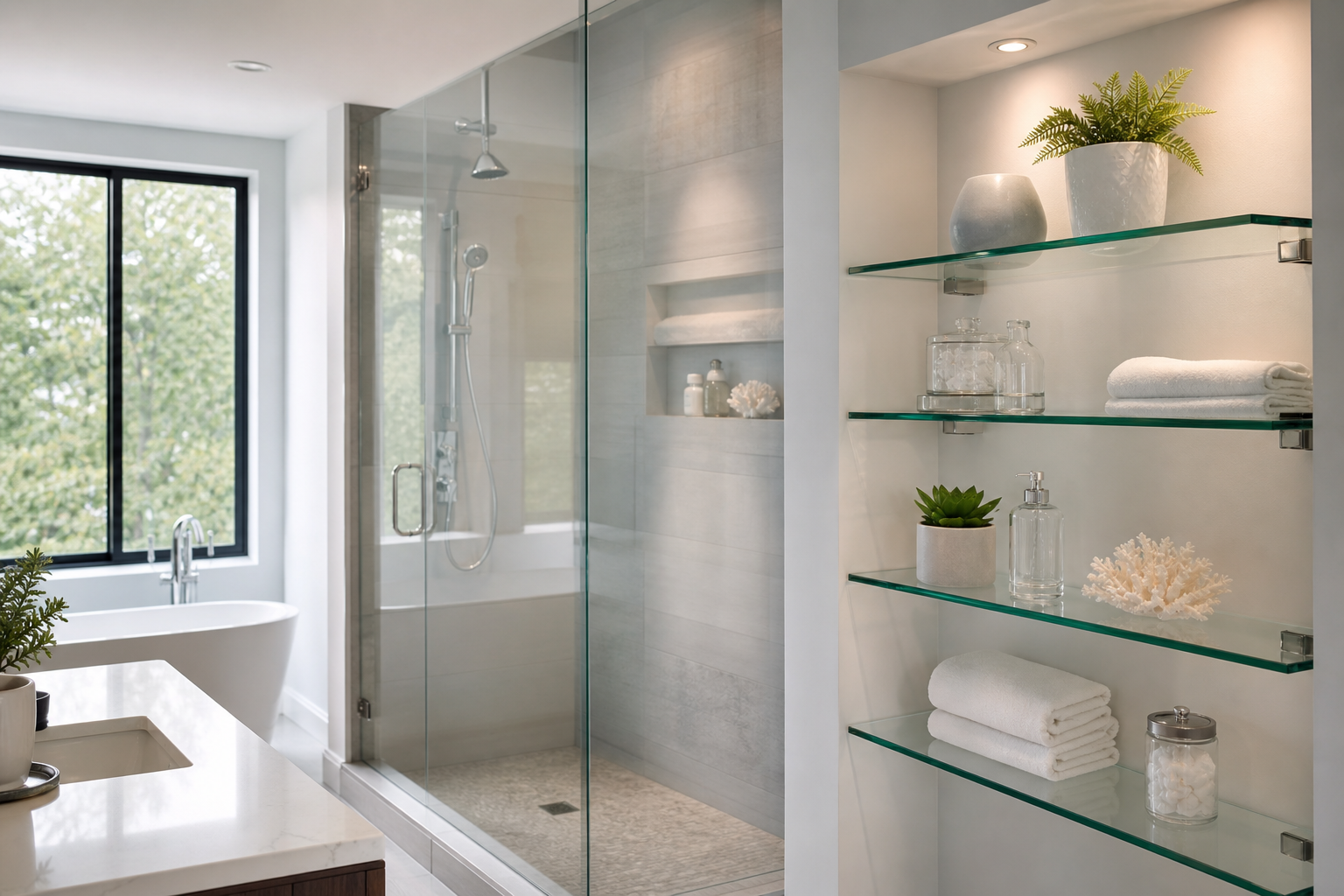
7 glass shelving ideas to make small spaces feel larger
Glass shelving is one of the easiest ways to increase light, reduce visual clutter and make compact rooms feel more open. Below are seven distinct glass shelving ideas, each paired with material and support guidance so you can choose a safe, stylish solution for kitchens, bathrooms, living areas, retail displays or gyms. If you want ready-made or custom options, OZ Shower Doors fabricates and installs a wide range of glass shelving for Edmonton homes and businesses.
1) Floating wall shelves to open sightlines in small kitchens
Why it works: Floating glass shelves keep sightlines clear and reflect light back into the room, which makes a small kitchen feel airier while providing easy access to commonly used items.
Material and thickness: Tempered glass is the recommended choice for wall-mounted kitchen shelves. For short spans and light loads, many installers use around 10 mm tempered glass, but the right thickness depends on span, load and finish, so confirm with your fabricator before finalising spec (custom glass shelves: thickness and support).
Support options: Use internal floating brackets that hide the fixings inside a drilled pocket in the glass, or choose low-profile metal brackets that support the shelf from below. Closer bracket spacing reduces deflection and lets you use thinner glass for the same load. Ask your installer for recommended bracket spacing based on expected weight and shelf length.
Styling tip: Pair thin clear glass with chrome or matte black hardware for a contemporary look, or use frosted glass to soften visual clutter while preserving light transmission. For inspiration and practical examples, see kitchen wall-shelf ideas (glass wall shelves for small kitchens).
2) Built-in cabinet glass shelves for a refined, airy display
Why it works: Adding glass shelves inside or above cabinets combines concealed storage with open display. Glass inside cabinetry gives a lighter overall appearance while keeping less attractive items out of sight.
Material and thickness: Inside cabinetry the span is usually short, so 6 mm to 8 mm tempered glass will often be sufficient for light objects. For heavier loads or wider spans, move to 10 mm or consult a fabricator about laminated options that improve safety and stiffness (glass shelving guide).
Support options: Channel supports and discreet shelf clips are common. Channel rails create a clean edge-to-edge look and simplify adjustable shelf placement. Channel systems also protect glass edges from direct contact with fasteners, which helps long term durability.
Styling tip: Use polished edges for a refined finish and leave a small reveal between the shelf and cabinet face to maintain a floating appearance. See curated examples for built-in glass shelving (glass shelving ideas).
3) Frameless corner and neo-angle shelves for tight bathrooms
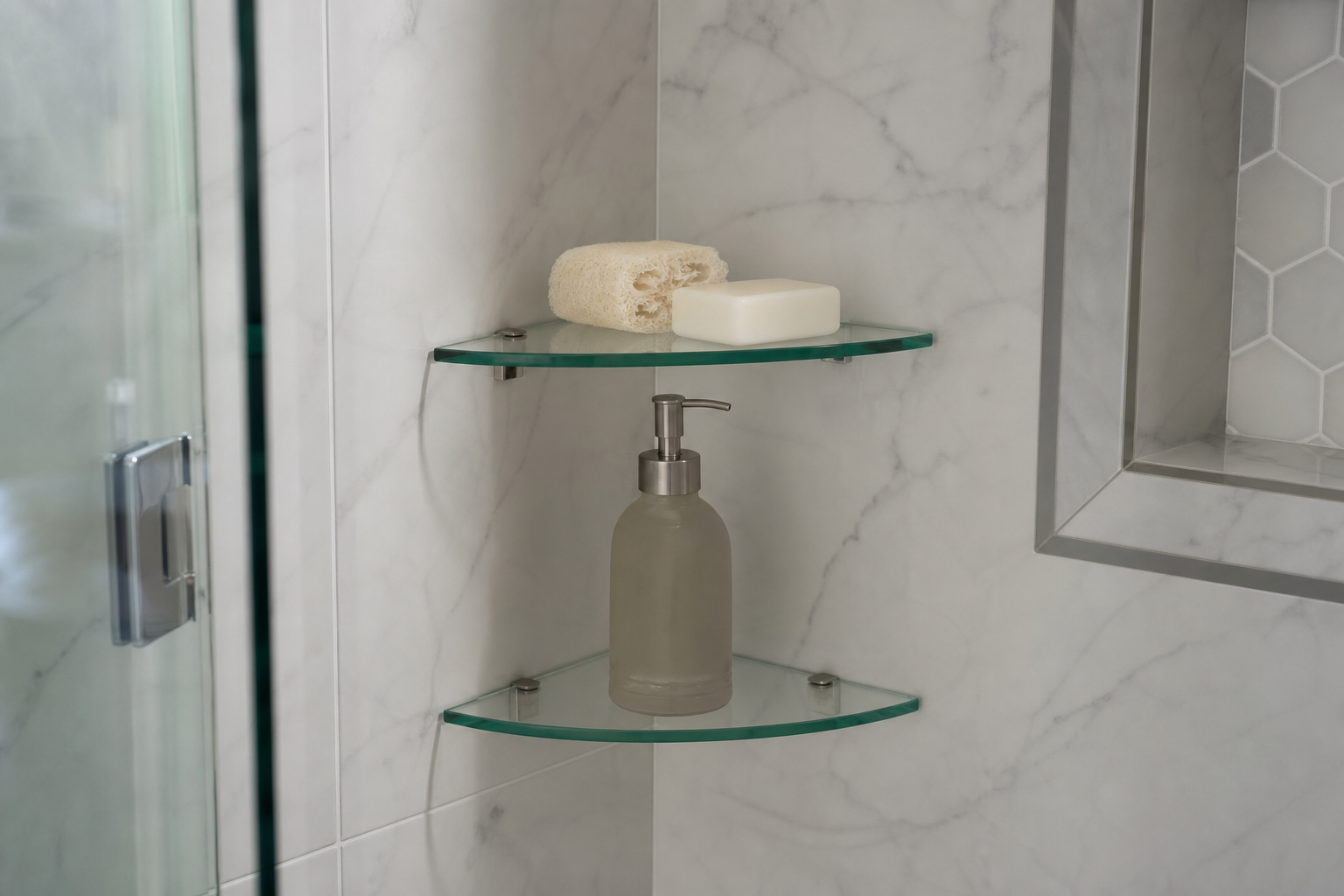
Why it works: Triangular or neo-angle glass shelves make use of corner space that is otherwise wasted, keeping toiletries off the basin or tub edge without stealing floor area.
Material and thickness: Corner shelves are typically short span elements. For light loads, 6 mm to 8 mm tempered glass is common, but avoid long unsupported spans. If you expect heavier items, choose thicker glass or add a support bracket and consult span and deflection guidance (span and deflection notes).
Support options: Corner clips, small chrome brackets or purpose-made glass corner supports work well. For wet areas prefer stainless steel hardware and confirm that seals and adhesives are suitable for bathroom use. Adhesive-only mounting is suitable only for very light loads and when applied by a professional who can guarantee product compatibility and cure conditions (shelving supports guide).
Styling tip: Use rounded or polished corners to reduce snagging and improve safety in tight shower or vanity spaces.
4) Recessed glass shelves and led-lit niches for vanities
Why it works: Recessed niches with glass shelves and integrated LED lighting produce a custom, luxury effect while keeping counters clear and protected from splashes.
Material and thickness: Recessed shelves are usually short and supported on ledges or channels, so 8 mm to 10 mm tempered glass with polished edges is common for a durable feel. For deeper or taller niches, verify load ratings and consider laminated glass for extra safety and to reduce the risk of shards if breakage occurs (glass shelves and bookcase designs).
Support and waterproofing: Integrate the shelf into a tiled niche with a stainless steel channel or ledge. Ensure any lighting is rated for bathroom zones and that sealing prevents moisture reaching connectors. When electrical components are involved, use a licensed electrician along with your glass installer to meet code and warranty conditions.
Styling tip: Use warm white LED strips behind the glass to create soft wash lighting, or edge-light the glass for a floating effect that feels modern and luxurious.
5) Freestanding glass shelving as a transparent room divider
Why it works: A freestanding glass shelving unit divides a studio or small living area while keeping visual openness. Clear shelves and glass panels let light move freely between zones, preserving a spacious feel even when the footprint is compact.
Material and thickness: Freestanding and taller units require thicker glass or framed panels for rigidity. Consider 10 mm to 12 mm tempered panels, or use framed systems that permit thinner internal shelves. For tall, unframed units, engineered design and anchoring to floor or wall are essential to prevent tipping.
Support and anchoring: Choose steel or aluminium frames that support glass panels, or specify fixed anchors to the floor and ceiling for free-standing partitions. For homes with children or pets, anchor the unit and prefer laminated glass or tempered glass with rounded edges to increase safety.
Styling tip: Keep styling minimal, with a curated number of items per shelf. The transparency is the feature, so avoid overcrowding which reduces the airy effect and can cause visual clutter.
6) Glass display shelving for retail and home collections
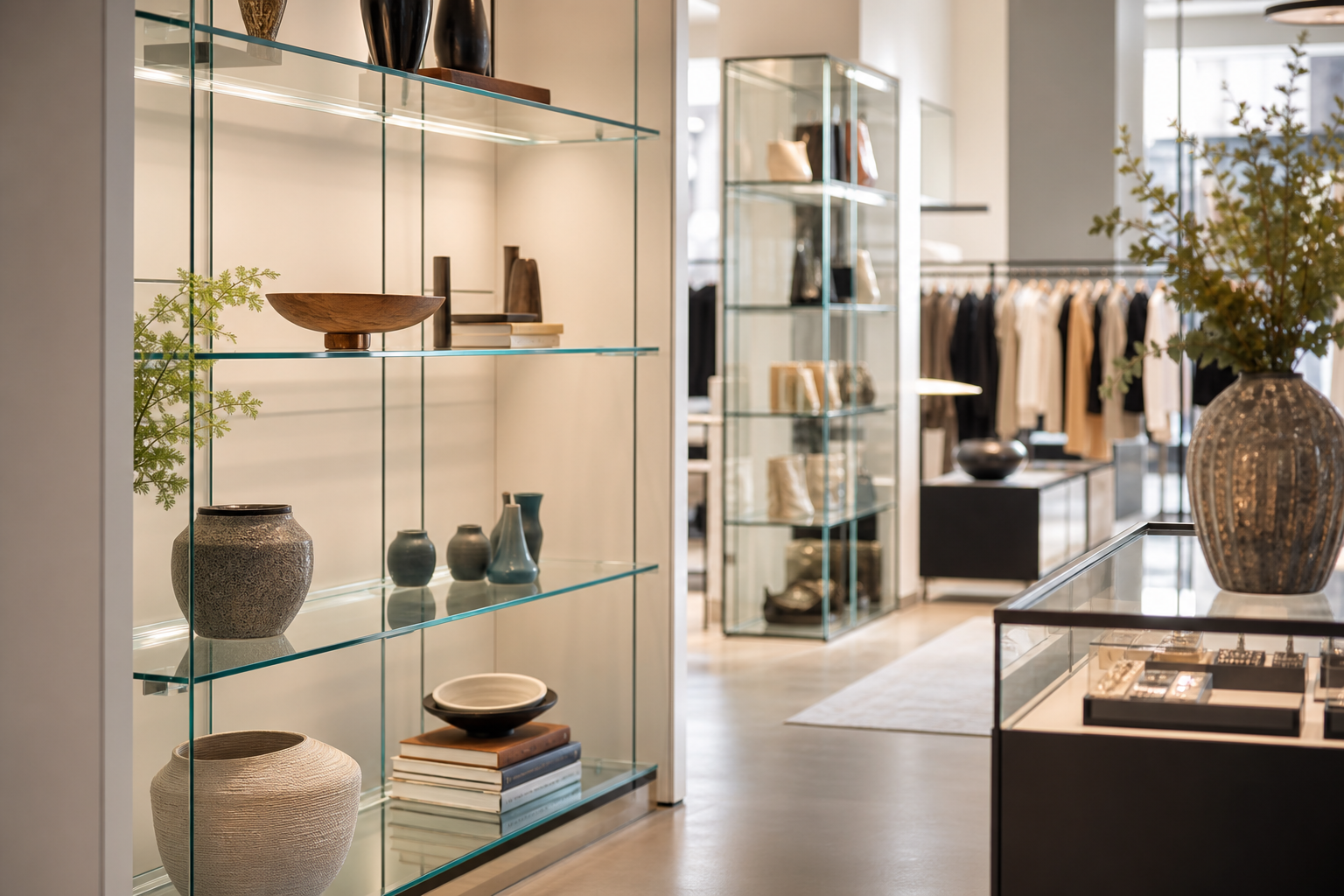
Why it works: Display shelving highlights merchandise or collectibles while protecting items and allowing viewers to evaluate pieces from multiple angles. Glass emphasizes the object rather than the shelf.
Material and thickness: For load-bearing retail shelving choose tempered or laminated glass sized to the expected loads. Laminated glass offers the advantage of holding fragments if breakage occurs. Consult span charts and fabricator guidance to match thickness to load and span (glass shelving guide, custom glass shelves: thickness and support).
Support options: Adjustable bracket systems, post-and-shelf fittings and channel rails are standard. Adjustable systems are especially helpful in retail environments where merchandising needs change frequently.
Care and presentation: Use edge-polished glass and low-reflection coatings where photography or strong spotlights are common to reduce glare. Clean glass frequently with a mild, non-abrasive cleaner and a microfiber cloth to maintain clarity and presentation quality.
7) LED-edge or backlit glass shelves paired with mirrors
Why it works: Illuminated glass shelving creates depth and drama in vanity areas and retail displays. Pairing illuminated shelves with mirrors multiplies light and makes narrow hallways or small bathrooms appear larger.
Material and finish: Edge-lit panels or standard tempered shelves combined with LED strips work well. Low-iron glass improves colour fidelity and light transmission when exceptional clarity is required. Plan for wiring channels and maintenance access when integrating lighting.
Installation note: LED installations must meet local electrical codes. Work with a glass fabricator and a licensed electrician to ensure safe, concealed wiring and appropriate IP-rated lighting for bathrooms or damp spaces. For inspirational combinations of glass and lighting see curated shelving ideas (glass shelving ideas).
How to choose thickness, supports and an installer in Edmonton
What to consider: Base your specification on expected load, shelf span, intended finish and safety needs. Shelf deflection increases quickly with span, so longer unsupported shelves require thicker glass or closer supports. Trusted technical references confirm that glass thickness and support spacing must be selected together rather than by rule of thumb (thickness and span guidance, glass shelving guide).
Tempered or laminated: For most residential shelving tempered glass is the standard for strength and safe failure behaviour. If you need extra protection against breakage or a commercial store application, laminated glass can hold fragments and add security. A fabricator will recommend the right option for your site and use case.
When to request engineering: Ask for engineered calculations if shelves exceed normal domestic spans, carry heavy loads, or form part of a structural partition. Your fabricator or installer should be able to advise when engineering is required and can provide or source the necessary drawings.
Choosing an installer in Edmonton: Select a local team that offers end-to-end service, from on-site measurement through in-house cutting and professional installation. OZ Shower Doors provides consultation, measurement, in-house fabrication and professional installation for Edmonton and surrounding communities, and can provide tailored quotes and installation advice for your project (OZ Shower Doors, glass shelving).
Frequently asked questions
What thickness should I choose for glass shelves in my home?
There is no single thickness that fits every application. For short spans and light loads 6 mm to 8 mm tempered glass is common. Many residential wall or display shelves use around 10 mm tempered glass as a safe default for moderate loads. Final selection depends on span and expected weight so consult span charts and your glass fabricator before ordering (thickness and support guide).
Are glass shelves safe for everyday kitchen and bathroom items?
Yes, when they are specified and installed correctly. Tempered glass is stronger than annealed glass and is the standard for shelving. For extra protection in high-traffic or heavy-load situations, laminated glass reduces the chance of falling shards. Ensure fixings are rated for the load and supports are spaced according to the fabricator's recommendations (glass shelving safety and supports).
How are glass shelves supported on tile or drywall walls?
Common options include drilled floating brackets that pass into heavy anchors, channel systems mounted to studs, or discrete shelf clips fixed to a back panel. When fixing to tile or drywall, locate studs or use rated anchors and, if necessary, install a backing timber or metal channel to distribute loads. For wet areas use stainless steel hardware and professional sealing to protect both the fixings and the finish.
How do I get custom glass shelving made and installed in Edmonton?
Start with photos and rough measurements and request a site visit for an accurate quote and precise measurement. OZ Shower Doors offers consultation, measurement, in-house fabrication and professional installation for Edmonton and surrounding communities. Visit their website to request a quote or view product options and to discuss finish, thickness and installation details (OZ Shower Doors, glass shelving).
Key takeaway: Glass shelving opens small spaces without sacrificing storage or display. Match glass type and thickness to span and load, choose appropriate supports, and work with a fabricator who measures and installs professionally to get durable, safe results.
Contact OZ Shower Doors to request a quote and a site visit for custom glass shelving in Edmonton.


