

Glass railing code in Alberta: where to find the rules and product approvals
This guide helps Alberta homeowners, renovators and contractors locate the authoritative code text and product‑approval references used when planning glass railings (guards and handrails). It explains where to download Alberta editions of the National Building Code (NBC), how Canadian construction‑product approvals (CCMC) are used for proprietary railing systems, the documentation you should request from manufacturers and installers, and practical next steps for a code‑aware site review in Edmonton.
Where to download Alberta’s National Building Code editions
The Alberta editions of the National Building Code are the authoritative starting point for technical requirements most Alberta municipalities reference for guards and handrails. The National Research Council (NRC) publishes Alberta‑specific NBC editions and hosts downloadable PDFs in the NRC Publications Archive. For example, the National Building Code: 2023 Alberta Edition is available from the NRC Publications Archive; download and read the official PDF so you can cite exact clause wording during permit review: National Building Code: 2023 Alberta Edition (NRC Publications Archive).
The NRC also retains earlier Alberta editions (for example the 2019 Alberta edition) and other provincial code publications. Confirm with your municipality which NBC Alberta edition it enforces before finalizing design documents for permit submission.
Key NBC guidance for stairs, guards and handrails (what to read first)
When researching glass railings, focus on NBC clauses and companion guidance that address stairs, guards and handrails and on any Alberta‑specific user guidance. The NRC publishes a focused companion titled "Stairs, Guards and Handrails (NBC)" that summarizes relevant code provisions and practical interpretations; that document is a useful map to the NBC clauses most relevant to glass panels and open stair configurations: Stairs, Guards and Handrails (NBC).
Watch for public‑review items and proposed changes that can alter acceptable guard details. For example, Proposed Change 361 in the NRC Codes public‑review process addressed limits on the size of triangular openings formed by stair risers/treads and the bottom element of a required guard — an item that can affect open‑stringer stairs and some glass‑panel layouts. Track such public reviews on the NRC Codes site to verify whether recent changes affect your project: Proposed Change 361 (NRC Codes public review).
How construction product approvals and CCMC evaluations affect glass railings
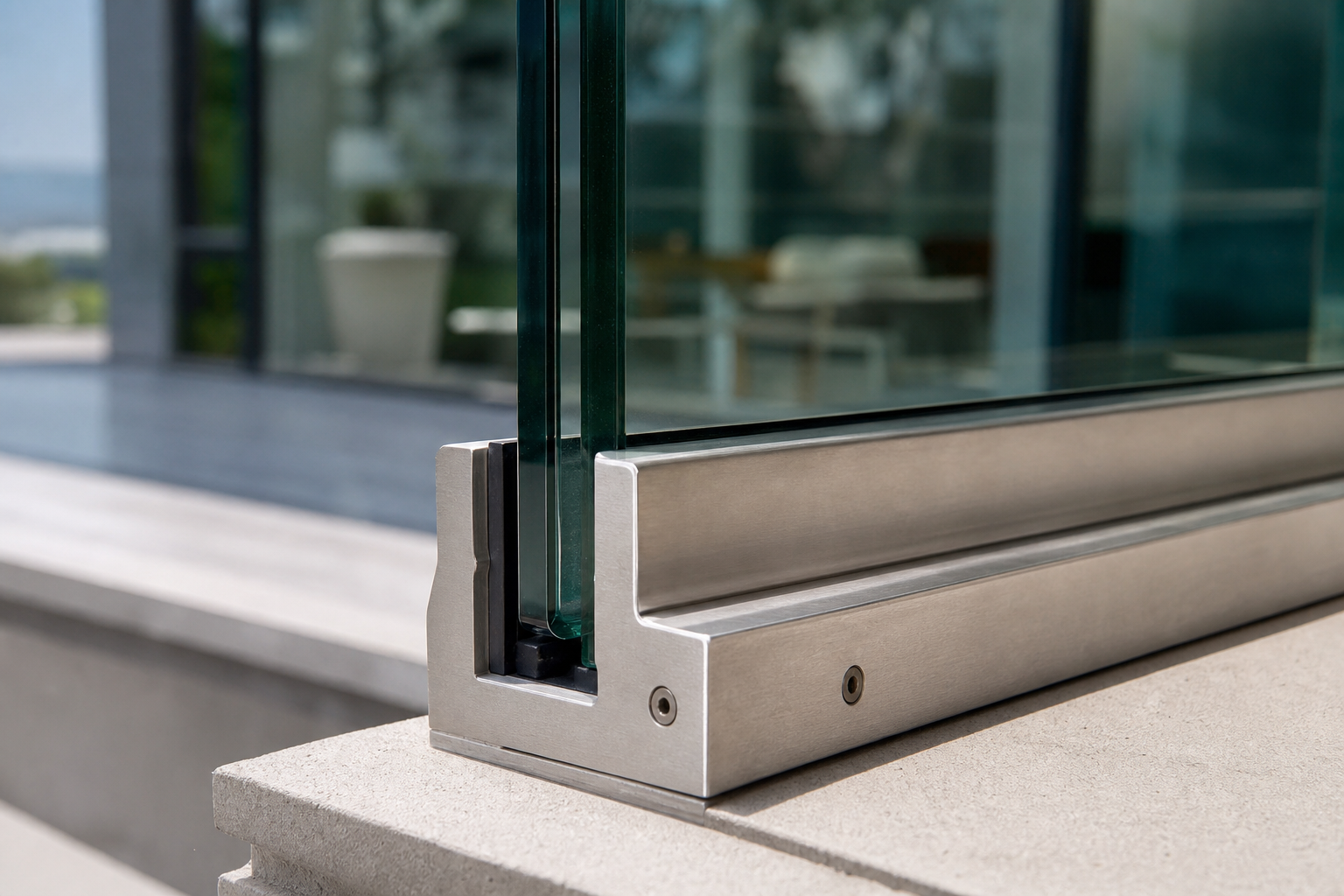
Proprietary glass railing systems (for example, spigots, base shoes/channels, clamp/frame assemblies) are commonly accepted for permit review when supported by a Canadian Construction Materials Centre (CCMC) evaluation or equivalent engineering evidence. The NRC explains the CCMC’s role in the Canadian construction product‑approval pathway and how CCMC evaluations are used as evidence for authorities: Construction product approvals in Canada (CCMC).
A CCMC evaluation report typically documents what was evaluated, test or analysis methods, the conditions or limitations of use, and any installation constraints. Authorities often accept a CCMC evaluation as demonstrable evidence that a specific system meets applicable code performance criteria. When a product lacks a CCMC number, local permit reviewers commonly request stamped engineering calculations or a professional‑engineer letter tied to the exact installation conditions.
Common glass railing system types and what approval evidence to request
Typical system families you will encounter include:
- Base shoe or channel‑mounted glass (glass retained in an aluminium channel fastened to the deck or tread).
- Spigot‑mounted glass (tempered panels held in stainless‑steel spigots fixed to the deck or supporting structure).
- Clamp or framed systems with top rails (aluminium or stainless frames clamping glass infill).
- Fully framed balustrades with glazed infill integrated into a structural frame.
For any chosen family, request product documentation that matches the installation method and projected loads. Useful items to ask for are a CCMC evaluation number (if available), manufacturer structural test reports and allowable loads, installation drawings that detail anchorage and fasteners, and any limiting conditions or exclusions in the product documentation.
To compare how manufacturers present configurations and installation details, a neutral example of an aluminium railing product site can help you visualise system families and typical installation notes: OZ Aluminium Railing (example product configurations). Use such examples to identify whether a proposed product includes third‑party evaluation (CCMC) or only manufacturer testing; if only manufacturer tests are supplied, expect the permit reviewer to ask for project‑specific calculations or an engineer’s confirmation.
Checklist: what to ask an installer and the documents they should give you

At quote time and before permit submission, use this concise checklist to confirm the installer or supplier can provide code‑useful documentation:
- Product evidence: CCMC evaluation number (if available) or the full structural/test reports tied to the exact model and installation condition.
- Manufacturer installation drawings and product limitation statements (span limits, glass type and edge finishing requirements) that match the proposed anchorage and site geometry.
- Stamped structural calculations or a licensed engineer’s letter when a CCMC evaluation is not available or when the installation departs from the tested configuration.
- An installer workmanship/QA checklist that shows how anchorage embedment, fastener lengths, torque values and glass handling are validated at installation.
- Site photos, plan and elevation sketches, and the municipality’s enforced NBC Alberta edition so the installer can match product evidence to the correct code text.
Frequently asked questions
Where can I download the Alberta edition of the National Building Code that applies to guards and handrails?
Download Alberta NBC PDFs from the NRC Publications Archive. The NRC hosts Alberta editions such as the National Building Code: 2023 Alberta Edition and earlier Alberta NBC releases; use those published PDFs as the authoritative citation when preparing permit materials: National Building Code: 2023 Alberta Edition (NRC).
What is a CCMC evaluation and why does an installer ask for one for a glass railing system?
A CCMC evaluation documents how a specific product or system performs against applicable Canadian code requirements. Authorities often accept CCMC evaluations as evidence that a proprietary railing or glazing system meets required performance criteria; the NRC explains the CCMC’s role in construction product approvals: Construction product approvals in Canada (CCMC).
Is a manufacturer test report enough for permit review, or will a municipality usually want a CCMC number or stamped calculations?
It depends on the municipality and the product. A manufacturer test report can be persuasive, but many permit offices prefer a CCMC evaluation or stamped engineering calculations when a product lacks a CCMC number or when the site conditions differ from the manufacturer’s tested setup. Check with your local permit office for the specific evidence they accept.
What should I bring to a site survey so an installer can provide documentation suitable for permit submission?
Bring clear photos of the proposed railing location, plan and elevation sketches if available, intended use (guard, handrail, balcony edge), and the municipality’s enforced NBC Alberta edition. This allows the installer to match product evidence to the correct code text and prepare installation drawings and any required engineering input.
Next steps: requesting a code-aware site review in Edmonton
Concise next step: gather site photos and the municipality’s preferred NBC Alberta edition, then request a code‑aware site visit so a fabricator/installer can review product evidence and prepare drawings or stamped calculations for permit submission.
If you want a local measurement and documentation review, request a site review and quote from a local fabricator who provides on‑site measurement, installation drawings, and installation scheduling. For a planning checklist produced by a local installer, see the detailed planning checklist on their blog: detailed planning checklist.
Authoritative sources cited in this article: NRC Publications Archive (Alberta NBC editions and Stairs, Guards and Handrails guidance), NRC Codes public‑review pages (Proposed Change 361), and NRC/CCMC product‑approval guidance. Always verify the NBC Alberta edition enforced by your municipality and confirm specific evidence requirements with your local permit office before finalizing designs.


