
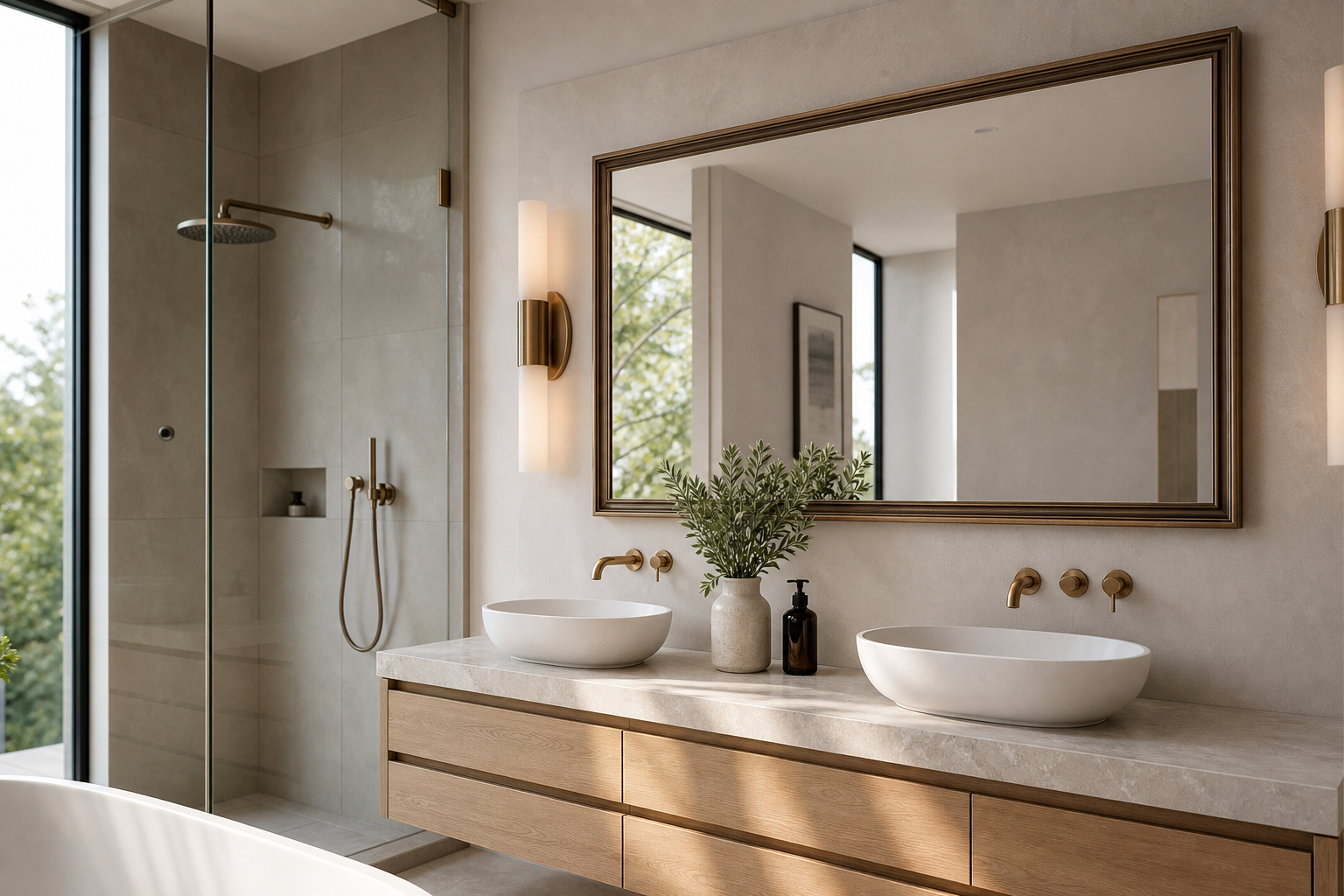
Framed mirrors explained: design, installation and care
What a framed mirror is and how it differs from frameless
A framed mirror is a sheet of mirror glass set inside or secured to a visible border that surrounds the glass edge. The frame can be a narrow metal trim, a substantial wooden surround, or an engineered profile that holds the glass and hides the mirror edge. The frame performs three practical roles: it defines the mirror's style, protects and conceals the vulnerable glass edge, and provides secure attachment points for mounting hardware.
Framed mirrors contrast with frameless mirrors, which have exposed polished or beveled edges and rely on adhesive clips or concealed anchors for support. Frameless mirrors give a cleaner, minimalist look and often appear flush with the wall. Framed mirrors add a decorative accent and can be easier to hang level because many modern framed products include factory-supplied hanging systems that simplify mounting and alignment (see the Frame My Mirror product care and installation guidance and general mount advice at The Home Depot for examples).
Why framed mirrors matter: benefits and common uses
Homeowners and contractors choose framed mirrors for reasons that mix design and function. Key benefits include:
- Design definition: frames provide a clear visual border to complement cabinetry, hardware or room trim, and they are available in finishes that match plumbing or lighting fixtures.
- Edge protection: the frame hides the mirror edge where moisture or accidental knocks could cause chipping or edge deterioration.
- Easier hanging: many framed mirrors include an integrated hanging system that helps with leveling and centering, reducing installation time and the need for special anchors. For details on common factory-supplied hanging systems, see Frame My Mirror's installation notes and The Home Depot's installation overview.
- Added features: frames make it simpler to add integrated LED backlighting, moulding accents, or applied trim without special fabrication to the mirror glass.
Common uses for framed mirrors include bathroom vanities, entryway accent mirrors, gym and studio walls, and retail or reception areas. For commercial settings that need sightlines and branding, a framed mirror can be a finished element that matches other metalwork or millwork in the space.
Frame styles, materials and finishes to consider
Choose a frame material and finish by balancing appearance, humidity exposure, and maintenance expectations. Typical options include:
- Aluminium and stainless finishes — corrosion resistant and thin profiles work well in bathrooms and modern interiors. Brushed nickel, chrome, or matte black finishes complement common plumbing hardware.
- Solid wood or stained profiles — deliver warmth and traditional character, best placed where regular moisture exposure is limited or where the frame is sealed and finished for bathroom use.
- MDF or engineered profiles with veneer — provide consistent shapes and painted finishes at lower cost; ensure edges and joins are well sealed for wet locations.
- Decorative moulding or applied trim — used to create substantial, furniture-like mirrors over vanities or mantels.
Finish choices matter visually and for longevity. For an Edmonton bathroom subject to regular humidity, metal finishes or sealed wood are typically lower maintenance than raw wood. If you plan integrated lighting, confirm the frame depth and wiring access with your supplier before ordering.
Framed versus frameless: decision criteria for your project
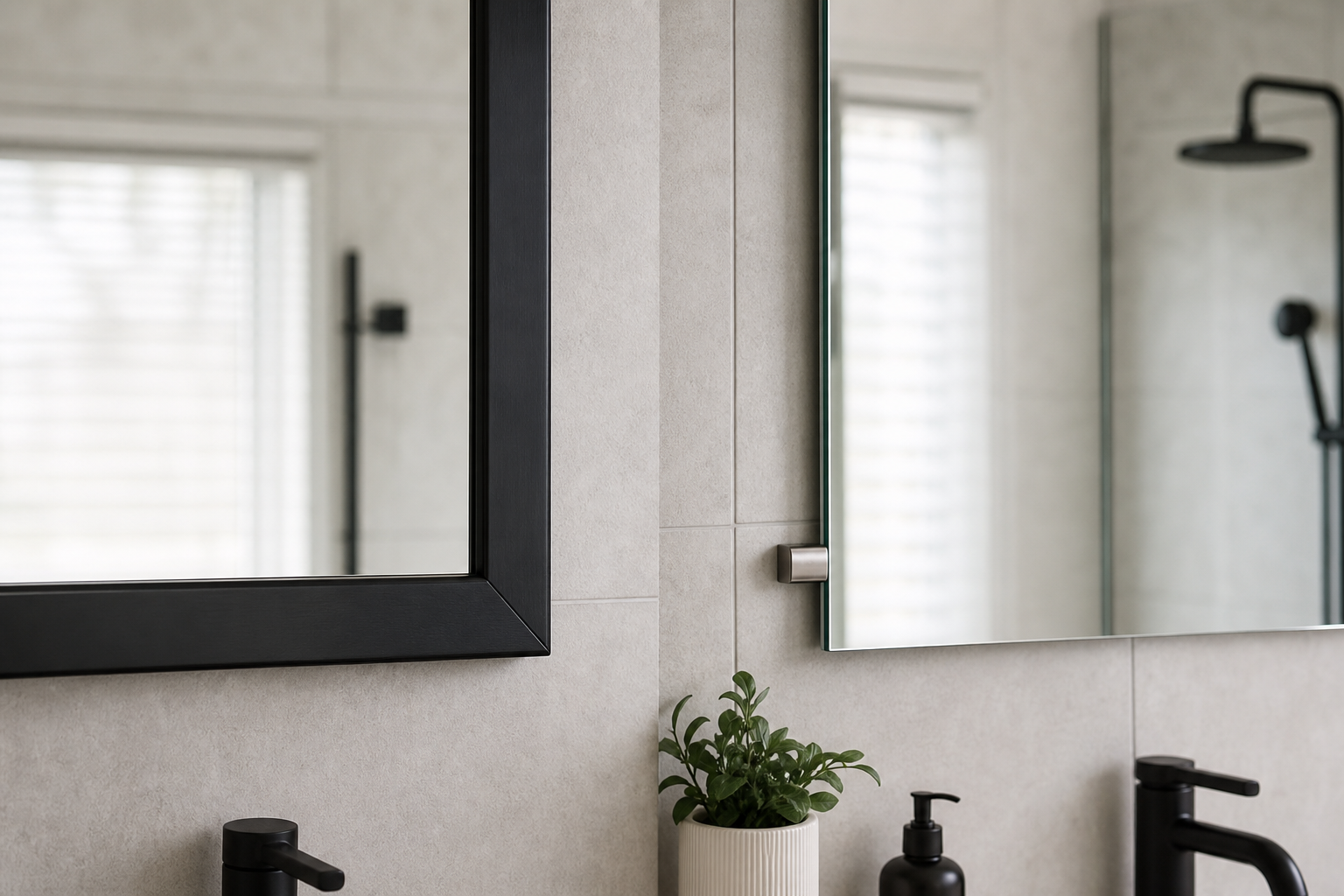
To choose between framed and frameless mirrors, compare these practical factors:
- Style priority: frameless suits minimalist, seamless looks; framed adds contrast and personality.
- Moisture and location: framed mirrors with metal or sealed frames generally perform better long term in humid bathrooms.
- Installation complexity: framed mirrors often include a hanging system that reduces installation difficulty, while frameless mirrors may require adhesive or multiple wall anchors and careful edge protection.
- Lighting and accessories: if you want LED lighting built into the surround, confirm the frame type supports wiring and ventilation.
- Budget and custom needs: framed mirrors can range from simple stock frames to fully custom, hand-finished surrounds; custom sizing and finishes affect lead time and cost.
Installation and hanging options that affect cost and prep
How a mirror is mounted has a direct effect on the installation price and required site preparation. Common framed-mirror mounting systems include wall brackets, French cleats, and integrated factory-supplied hangers. Factory-supplied hanging hardware is intended to make leveling and centering easier and to provide secure attachment points; see Frame My Mirror for typical hanging hardware details and The Home Depot for general mirror mounting guidance.
Wall substrate also matters: drywall, tile, plaster, concrete and cement board all require different anchoring strategies. A professional installer will locate studs, select appropriate anchors for tile or concrete, and confirm that the wall can bear the mirror weight. Tell your installer the wall type, whether tile is present, and any obstructions behind the surface so they can plan anchor placement and protection.
What to tell your installer before a quote:
- Finished wall surface (painted drywall, tile, plaster, etc.).
- Rough dimensions of mirror width and height, or that you want custom sizing.
- Desired frame material and finish or reference photos.
- Any planned lighting, outlets, or switch locations near the mirror.
- Whether you prefer a top or center mounting height and mirror clearance above counters or vanities.
Care, cleaning and maintenance to preserve frame and glass
Routine care keeps a framed mirror looking new and prevents edge damage. Use mild, non-abrasive glass cleaners and a soft microfiber cloth for the glass. Avoid aggressive ammonia-based cleaners on some frame finishes and do not spray cleaner directly onto the mirror if the frame joints are exposed, to prevent liquid entering the edge seal. For manufacturer-recommended product care and installation details consult the Frame My Mirror care article and general installation guidance at The Home Depot.
Periodic maintenance checklist:
- Wipe the mirror dry after heavy showers to reduce ongoing humidity exposure.
- Inspect frame joints for gaps and touch up sealant if moisture can reach the mirror edge.
- Check mounting screws and cleats annually to ensure the mirror remains secure.
- If the frame finish is metal, wipe with a soft cloth and a manufacturer-approved cleaner to prevent finish wear.
Common objections, risks and how to avoid them
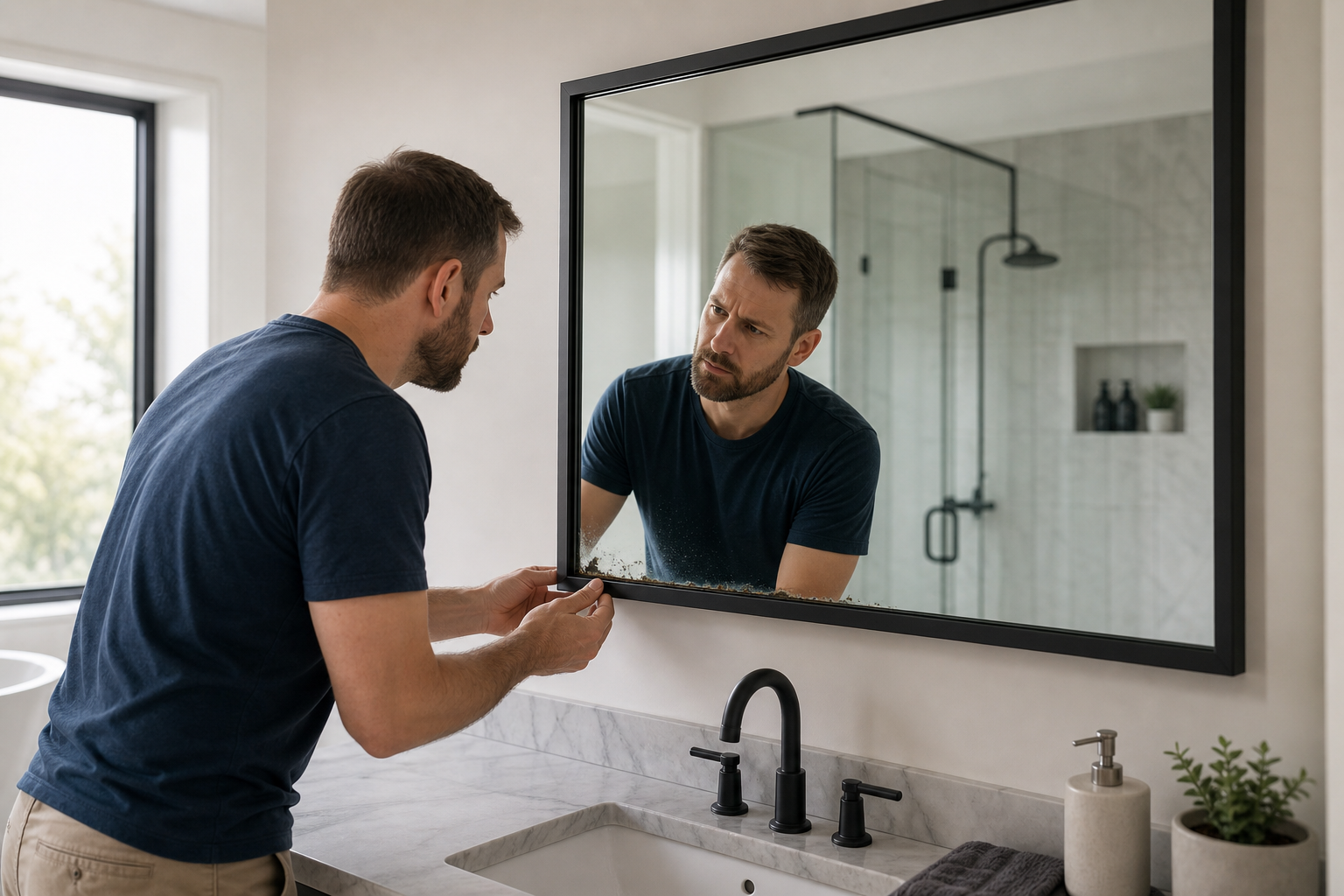
Buyers often worry about mounting in wet rooms, matching the frame to existing hardware, and lead times for custom sizes. Practical mitigations include selecting metal or sealed frames for bathrooms, bringing a photo or sample of your plumbing finish to ensure a close match, and asking your supplier about typical lead times for custom production. Local customer reviews for OZ Shower Doors note strong workmanship and fast turnaround, while a small number of reviews call out scheduling or repair follow-up as an area for clearer communication; raise these topics during your quote to confirm scheduling expectations and warranty follow-up procedures (see OZ Shower Doors for company details and reviews).
How to buy custom framed mirrors in Edmonton and what to expect
If you want a custom framed mirror in Edmonton, the usual local path is free consultation, on-site measurement, selection of frame material and finish, fabrication, and professional installation. OZ Shower Doors provides an end-to-end process from measurement to installation and offers framed and frameless mirrors as part of its local product lineup. For a direct look at framed options you can view the mirror with frame product page or learn more on the OZ Shower Doors home page.
Expect the consultation to confirm exact measurements, preferred frame profile and finish, mounting method, and any integrated lighting requirements. Professional installers will confirm wall substrate and the location of studs or backing and will schedule installation when the mirror is ready. Ask for before-and-after photos and a checklist of post-install maintenance so you know who to contact if follow-up is required.
Decision checklist and next steps
Use this short checklist to turn research into a purchase decision:
- Measure the wall height and width where the mirror will go and note backsplash or counter clearances.
- Choose a frame material and finish that matches your fixtures and suits humidity exposure.
- Confirm whether integrated lighting is required and whether the frame can accommodate wiring.
- Identify the wall substrate and share that with your installer for accurate anchoring and quoting.
- Request a written quote that lists lead time, mounting method, and follow-up or repair procedures.
FAQ
Are framed mirrors suitable for bathrooms and high-humidity areas?
Yes. Framed mirrors can be suitable for bathrooms when the frame is metal or properly sealed wood or engineered board. Metal frames and finishes resist humidity better than raw wood. Ask the supplier about edge sealing and frame finishes designed for wet rooms; manufacturer care notes and installation guidance explain recommended sealing and mounting practices.
How do I measure my wall for a custom framed mirror?
Measure the width and height of the available wall space, note counter or vanity heights, and record clearances for light switches or outlets. Measure to the finished wall surface and bring pictures of the space to your consultation. A professional measurer will verify these on site before fabrication.
What mounting methods do professional installers use for framed mirrors?
Installers commonly use French cleats, heavy-duty wall brackets, or integrated factory hangers supplied with the mirror. Anchor choice depends on wall type: toggle or sleeve anchors for hollow drywall, masonry anchors for concrete or tile, and direct screw mounting into studs when possible. Modern framed mirrors often include mounting hardware intended to make leveling and installation easier; see the Frame My Mirror and The Home Depot resources for typical hardware explanations.
Can I add LED lighting to a framed mirror and how does that affect installation?
Yes. Many framed mirrors can be ordered or retrofitted with LED lighting, but wiring access, transformer placement and ventilation must be planned in advance. Adding lighting usually increases installation complexity and may require an electrician to supply power and a safe junction point behind or near the mirror.
How long does a custom framed mirror take to manufacture and install in Edmonton?
Lead times vary by frame complexity and workload. A local supplier will give an estimated timeline at the quote stage. Confirm whether the quoted timeline includes both fabrication and scheduled installation so you know when the project will be finished.
OZ Shower Doors offers local consultations, custom sizing and professional installation for framed mirrors in Edmonton. For framed mirror options and to request a quote, visit the mirror with frame product page.
Key takeaway: framed mirrors are both a functional edge protection system and a design opportunity. Choose materials, finishes and mounting methods to match the room's humidity, lighting needs and visual style, and work with a local installer to ensure secure, long-lasting results.


